

SimplePractice issues rarely show up as one big denial you can spot and fix in a single afternoon. More often they show up as small, quiet gaps between what your EHR says happened and what the payer actually did, and those gaps compound into real money left on the table every month.
For a solo clinician this might mean a few hundred dollars a quarter. For a group practice with multiple payers and dozens of clinicians, it can mean thousands of dollars in unrecovered revenue sitting quietly in accounts you stopped checking because the balance showed zero.
This article walks through the specific ways these breakdowns happen, where they tend to hide, and what an owner should require from billing support before trusting it with the practice’s cash flow.
The SimplePractice Issues Hiding Payments Between Your EHR and Clearinghouse
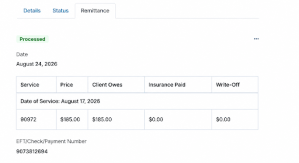
The most common version of this problem looks simple on the surface: your EHR shows $0 for a claim, but the payer’s own portal shows a payment of $135 already sent. Nobody stole the money, the systems just failed to talk to each other, and unless someone is actively reconciling both sides, that payment sits unposted and unreconciled indefinitely.
Sometimes the mismatch is not even between the EHR and the payer, it is between two reports inside the same clearinghouse. One report for an individual claim does not match the total shown for that period or group, which means someone has to manually trace the discrepancy claim by claim before they can trust either number.
Why Claims Come Back Rejected When the Payer Says They Were Never Received
A clearinghouse issue can create a situation where the payer tells you the claim was never filed (sometimes logged as a no claim found status), while your system shows it was sent days ago. A data glitch on the clearinghouse side can silently fail to transmit a batch of claims without ever flagging the error, which means the practice does not find out until someone notices the aging account.
When this happens across multiple days of submissions, the fix is rarely a simple batch resubmission. Correcting it typically requires:
- Finding every individual patient and session affected, since many EHRs cannot batch resubmit a range of claims at once
- Manually cross referencing the appointment calendar against what the clearinghouse actually confirms as transmitted
- Working without a clean report of exactly what was submitted over the affected days, because many systems cannot generate that view on demand
- Calling the payer directly to confirm receipt once the claims come back rejected, only to be told the payer never received them in the first place
Our deeper breakdown in SimplePractice reports and what they actually show covers why these reporting gaps exist and which reports owners should be pulling regularly rather than waiting for a problem to surface.
To make it harder, a payer can unilaterally change a provider’s NPI on their end without notifying the practice, which causes clean claims to reject for a reason that has nothing to do with documentation or coding. If nobody is watching for that pattern, the practice can spend weeks troubleshooting the wrong problem.
When a Payer Changes Systems Without Warning
One practice spent months working accounts receivable follow up on claims that simply were not moving. The claim status inside the payer’s own system never changed, so the billing team reached out using every clearinghouse reference number they had on file, assuming the issue was on their end.
The real cause: the payer had changed systems and merged platforms behind the scenes, and the result was a mess where nobody, including the payer’s own representatives, could confirm what had actually been received. This kind of unannounced payer migration is one of the clearest examples of how days in A/R can quietly stretch to 60 days or more without any single claim technically being denied.
These events are not rare edge cases. They are a recurring part of behavioral health billing, which is part of why SimplePractice billing limitations and blind spots need to be understood before a practice assumes its EHR alone can carry the full reconciliation workload.
SimplePractice Issues With Copay and Coinsurance Errors
Beyond claims that go missing entirely, there is a second category of error that shifts cost directly onto the patient, and therefore onto the practice’s collection rate. A copay that should have been $35 sometimes posts as only $25, which means the practice has to go back and collect the difference, often weeks after the appointment when the patient has already mentally closed out the visit.
Coinsurance splits can change mid treatment too, such as a patient’s responsibility shifting from 80 percent payer coverage to 70 percent without clear notice, which changes every subsequent claim’s expected payment. In many of these cases the payer has no real way of confirming what was actually collected from the patient, because that portion is often tracked as a patient balance rather than something reported back to the payer’s system.
There is also the reverse problem: a payer call that insists the benefit information the practice has on file is wrong, revealing that the patient had already hit their out of pocket maximum. When that happens, the practice has to credit the patient back for amounts collected in error, which is an administrative task with no automation and a direct hit to cash that was already counted as collected.
Payment Visibility Gaps: What Happens With CIGNA Claims
CIGNA claims add another layer of difficulty because of how eligibility, benefits, and payment data flow through different systems. A clearinghouse portal might be used to check eligibility and benefits, while the payment itself shows up somewhere else entirely, creating a confusing trail when something does not reconcile.
In one real example, a payment that should have shown as $88 appeared as $0 inside the EHR, even though the payer’s own system confirmed a check had been sent for that exact amount. The billing team called the clearinghouse support line with the reference number and check number in hand, and still could not locate the payment, partly because CIGNA claims do not always route through the same network as other major payers, and the EHR’s default clearinghouse could not be checked directly by the practice.
For practices working through this specific payer regularly, behavioral health billing for CIGNA and stopping silent underpayments covers the payer specific reimbursement rules that make this kind of visibility gap more likely to happen and harder to catch without a dedicated reconciliation process.
Normally, accounts receivable work happens directly inside the EHR, and a $0 balance is often the trigger for a call to the payer. But when that call is the only safeguard, every claim that does not get a second look is a claim where an error can sit unnoticed indefinitely.
How Often Do SimplePractice Issues Show Up in Claims Data
Tracking claims across two different platforms side by side, one biller found that roughly 15 percent or more of claims in one EHR needed correction after the fact, compared to roughly 5 percent or more in SimplePractice. That gap matters because it shows the problem is not evenly distributed, some platforms surface more of these discrepancies than others, and the volume of manual review required scales with it.
| What You See in the EHR | What It Could Actually Mean | Why It Matters to Cash Flow |
|---|---|---|
| Claim balance shows $0 | Payment was sent and recorded by the payer but never synced to the EHR | Revenue sits uncollected until someone manually verifies the payer’s side |
| Claim marked as submitted | Clearinghouse failed to transmit without flagging an error | Days in A/R stretch out while the claim ages with no active status |
| Copay collected matches fee schedule | Benefit terms changed and were never updated in the system | Practice either undercollects or has to refund the patient later |
| Claim shows as paid in full | A partial or second payment was issued separately and not linked | Underpayments go unnoticed unless someone checks the full payment history |
The easiest response to any of these situations is to post the $0, move on, and assume the claim is a loss. That path feels efficient in the moment, but it is also the single biggest driver of quiet write-offs that never should have happened, because the money was often already sitting with the payer. The work to catch it, pulling the denial detail, taking a screenshot of the payer’s record, and documenting the discrepancy, is real time, but it is time that protects revenue the practice already earned.
Patient Responsibility Errors and the Balance Billing Shortcut
When a claim comes back with an unexpected patient balance, there are two very different ways a billing team can handle it. One option is to simply send a statement to the patient without ever calling to explain or verify the charge. The other is to call the patient directly, explain exactly why the balance exists, and confirm it is accurate, which is considerably more work, especially when the balance itself was the result of an error on the payer’s or clearinghouse’s side.
In a meaningful share of cases, roughly 10 percent to 20 percent or more of flagged accounts, the easier answer from a billing vendor is simply to say “balance bill the patient” rather than investigate further. The real issue in most of these situations is not that the patient might end up with too large a balance, it is that the practice itself is not getting paid what the payer actually owes, and billing the patient becomes a way to avoid doing the reconciliation work.
This distinction matters for collection rates and for patient trust. Our guide on patient responsibility billing and the revenue leak it causes goes deeper into how practices can tell the difference between a legitimately owed balance and one created by a system error that should be corrected before it ever reaches the patient.
Chasing Underpayments and Second Payments
Not every billing error shows up as a missing payment, some show up as a short one. A claim that should have paid $130 comes back with a check for $90, and unless someone is actively comparing expected reimbursement against the contracted fee schedule for that payer, the shortfall simply gets absorbed as if it were the correct payment.
Recovering the difference means filing for a second payment on a claim that already shows as closed in most systems, which many EHRs are not built to track cleanly. Without a process built specifically around catching underpayments, these differences accumulate quietly across every payer the practice bills.
Recoupments That Arrive Without Any Warning
Perhaps the most disruptive version of these billing breakdowns is the recoupment that shows up with no prior notification at all. A practice can receive notice in January 2026 about claims from 2024, sometimes three or four separate claims at once, each one a small individual overpayment, such as $20 on a single claim, that adds up once a payer bundles a batch of them together.
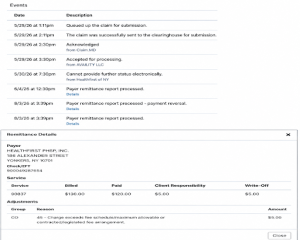
Per payer, these recoupment batches can total $500 to $1,500 or more pulled directly from future payments, often with little warning and limited time to dispute them. According to CMS guidance on overpayment recovery, payers are generally required to send a demand letter before initiating recovery, but the lookback period and notice requirements vary significantly by payer and by state, which is why tracking these demands closely matters. The AMA’s overpayment recovery toolkit outlines how state laws and payer contracts both shape how far back a payer can reach for a recoupment, which is exactly the kind of state specific and payer specific rule a practice needs someone actively tracking.
Reconciling payments against the electronic remittance advice a payer sends is one of the few reliable ways to catch these discrepancies before they turn into a surprise recoupment two years later, but it requires someone reading every ERA line by line rather than trusting the top line balance.
If you want a sense of how these numbers compare to a healthy practice, the behavioral health RCM benchmarks guide breaks down what collection rates, clean claim rates, and days in A/R should look like when a practice’s billing is functioning the way it should.
What to Require From Behavioral Health Billing Support
Every example above points to the same underlying need: someone has to actively reconcile what your EHR shows against what the payer’s system shows, on every claim, every week, not just when a balance looks obviously wrong. That is not a feature most general billing vendors build their workflow around, because it is slow, manual work with no shortcuts.
Before trusting any outside billing support with a behavioral health practice’s revenue, owners should insist on a few specific things:
- Documented workflows for exactly how data discrepancies between the EHR and clearinghouse are caught and resolved, not a vague promise to “follow up on denials”
- Monthly reporting that shows which claims were reconciled, which were flagged as underpaid, and which recoupments were identified before they hit as a surprise
- Full visibility into what is being worked and why, including screenshots or documentation when a payer’s portal contradicts the EHR
- Specific knowledge of state and payer specific reimbursement rules, since recoupment lookback periods, prompt pay deadlines, and coinsurance structures vary by payer and by state
- A process for calling patients to verify a balance before it is ever sent as a statement, rather than defaulting to balance billing when a claim gets complicated
Ardent Practice Partners works exclusively with behavioral health practices because these problems, from an EHR showing $0 on a paid claim to a recoupment landing two years after the original visit, require someone who knows the specific payer rules, platform limitations, and documentation standards this specialty runs into every day. That focus is what allows for the kind of claim level reconciliation and monthly transparency that general medical billing support typically is not built to provide.
Conclusion
Left unchecked, SimplePractice issues like unreconciled payments, unnoticed coinsurance changes, and recoupments that arrive without warning do not just create extra work, they quietly erode a practice’s collection rate and stretch out days in A/R long after a claim should have been closed. The cost of inaction is not one dramatic denial, it is dozens of small ones compounding every month.
Want to see how many of these gaps might already be sitting in your own claims data? Schedule a brief call with Ardent Practice Partners to walk through what a full reconciliation of your EHR against your payer data would actually reveal.